Introduction- SEO for small business Singapore
SEO is changing as artificial intelligence transforms the way people search for information online.
For many years, online search was relatively straightforward. Someone would open Google, type a few keywords, browse the search results and click on a website.
Today, the search journey is becoming more complex.
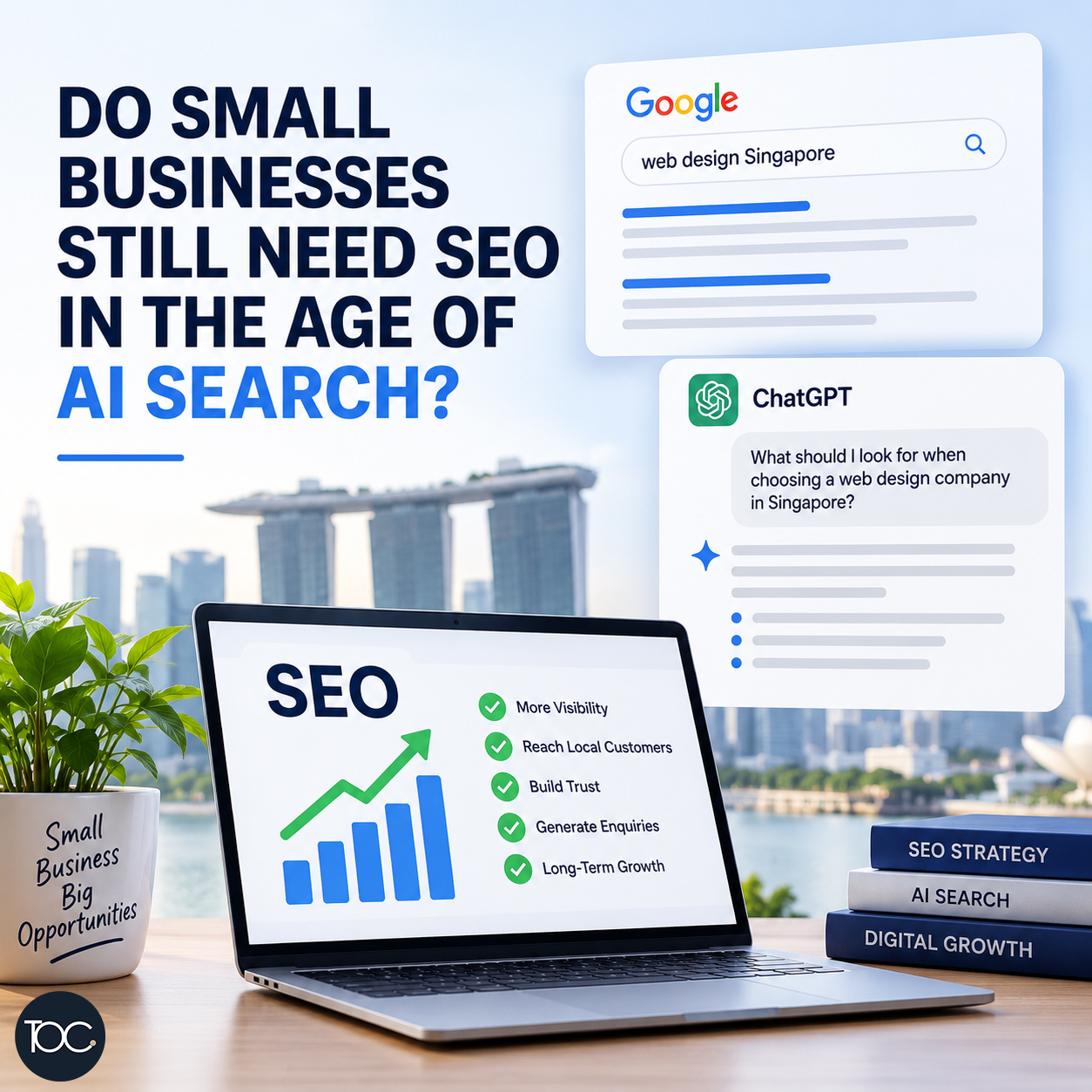
People can still use traditional Google Search, but they can also ask questions through AI-powered search experiences and AI assistants such as ChatGPT. Instead of receiving only a list of website links, users may receive an AI-generated answer that summarises information from different sources.
This has led many small business owners to wonder:
If AI can answer customers’ questions directly, do small businesses still need SEO?
The answer is yes—but SEO is evolving.
Search engines still need to discover, understand and evaluate websites. Customers still use Google to look for businesses, products and services. At the same time, businesses now need to consider how their information may be discovered through AI-powered search experiences.
SEO is therefore no longer only about trying to rank a webpage for a particular keyword.
It is increasingly about making sure your business is:
- Easy to discover
- Easy to understand
- Relevant to customer searches
- Technically accessible
- Helpful and informative
- Trustworthy
- Visible across different search experiences
For small businesses in Singapore, this means SEO isn’t disappearing because of AI.
Instead, having a useful, well-structured and technically sound website may be more important than ever.
Table of Content
1. What Is Changing About Online Search?
Traditionally, someone looking for a service might search Google using a short phrase such as:
Google would then display a list of websites that it considered relevant.
That type of search still happens every day.
However, AI is making searches more conversational.
A user might now ask:
“What should I look for when choosing a web design company in Singapore for a small business?”
Instead of simply showing links, an AI-powered search experience may provide a detailed answer based on information it has discovered from various sources.
Customers may now discover businesses through:
- Traditional Google Search
- AI-powered Google search experiences
- ChatGPT and other AI assistants
- Google Maps and local results
- Voice searches
- Image and visual searches
- Social media platforms
The customer search journey is becoming more diverse.
SEO therefore needs to evolve alongside it.
2. Is Traditional SEO Dead Because of AI?
No.
Traditional SEO fundamentals remain important.
Search engines and AI-powered search systems still need to understand:
- What your website is about
- What services you provide
- Where your business operates
- Which pages are important
- Whether your content is useful
- Whether your website is technically accessible
Important SEO fundamentals still include:
- Website structure
- Page titles
- Relevant content
- Internal linking
- Mobile responsiveness
- Website speed
- Crawlability
- Indexability
- Website security
- Backlinks
- User experience
What is changing is the way businesses should think about SEO.
Instead of focusing only on:
“How can I rank #1 for this keyword?”
businesses should increasingly ask:
“Does my website provide useful information that answers what my potential customers actually want to know?”
3. Why Do Small Businesses Still Need SEO?
Customers still search online before making purchasing decisions.
They may search for:
- A company
- A service
- A product
- Prices
- Reviews
- Comparisons
- Solutions to problems
- Advice
- Local businesses
For example, someone may search:
“WordPress maintenance Singapore”
because they need someone to maintain their company website.
Another person might search:
“How much does a website cost in Singapore?”
because they are considering building a new website.
If your business provides these services but your website doesn’t clearly explain them, search engines may have difficulty understanding when your website is relevant.
SEO helps create that connection between:
What your business provides
and
What potential customers are searching for.
4. AI Search Still Needs Information
AI-powered search doesn’t mean websites are no longer important.
AI systems need information to understand businesses, products, services and topics.
Your website gives you an opportunity to clearly explain:
- Who your company is
- What your company does
- Which services you provide
- Where you operate
- Who your customers are
- What experience you have
- What questions you can answer
A website containing only a few sentences provides relatively little information about the business.
A website with comprehensive service pages, useful guides, FAQs and relevant portfolio content provides much more context.
This doesn’t mean businesses should publish hundreds of pages simply for SEO.
The objective should be to provide useful and relevant information about subjects genuinely related to your business.
5. Your Website Is Still Your Digital Home
Businesses today may have:
- TikTok
- YouTube
- Google Business Profile
These platforms can all contribute to your online presence.
However, you don’t completely control them.
Algorithms can change.
Features can disappear.
Organic reach can decline.
Accounts can be restricted.
Your website is different.
Your business controls:
- Your content
- Your services
- Your portfolio
- Your calls to action
- Your contact forms
- Your branding
- Your customer journey
SEO helps people discover this digital asset.
6. SEO Is No Longer Just About Keywords
Keywords remain useful because they help search engines understand the topic of a page.
But modern SEO shouldn’t involve repeating the same keyword excessively.
For example, imagine you have a page targeting:
WordPress maintenance Singapore
A useful page shouldn’t simply repeat that phrase throughout the page.
It should answer related questions such as:
- What does WordPress maintenance include?
- Why does WordPress need maintenance?
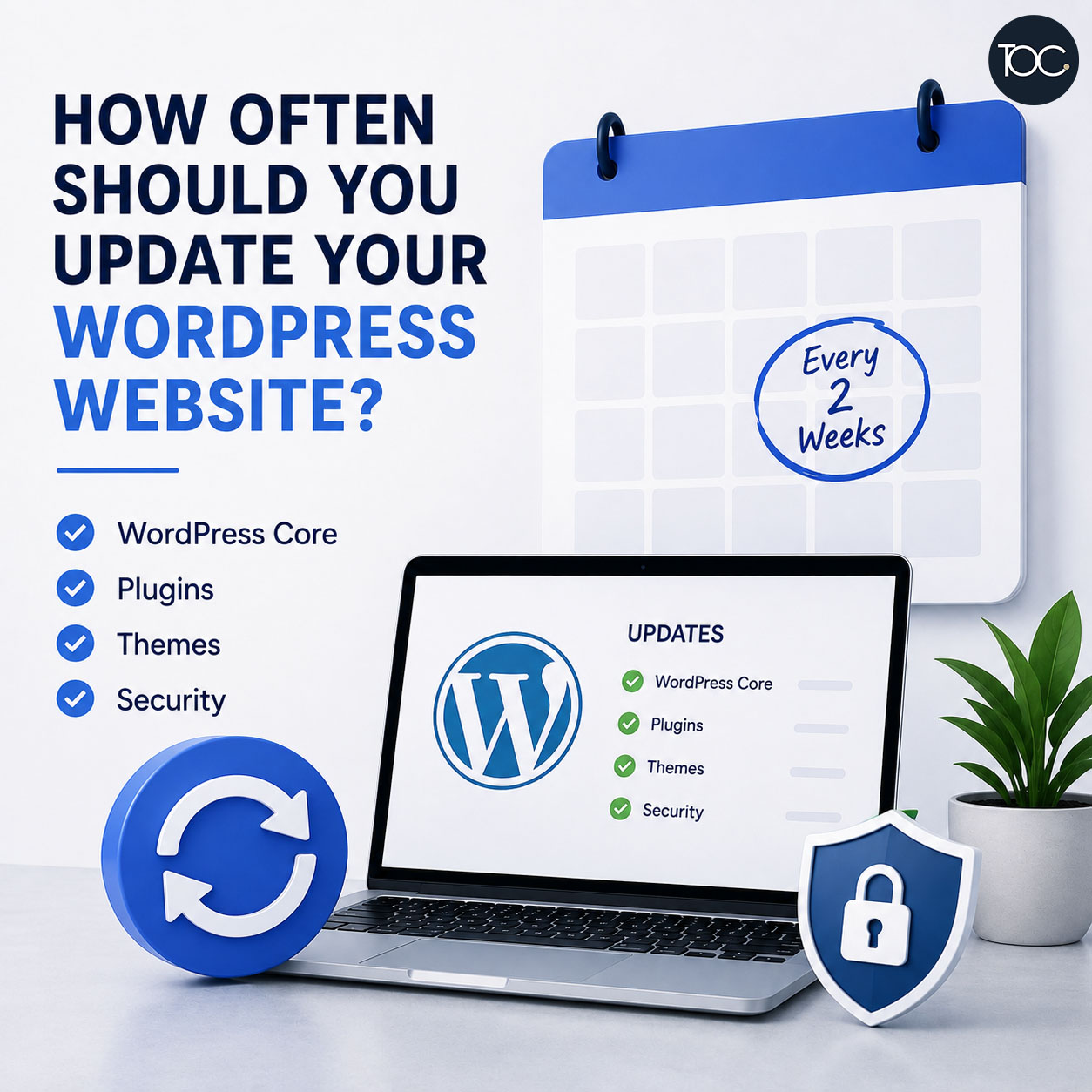
- How often should WordPress be updated?
- Do plugins need updating?
- Are website backups important?
- Does a website need maintenance if its content doesn’t change?
- What happens if a WordPress website isn’t maintained?
This provides far more value than simply repeating a keyword.
7. Answer the Questions Your Customers Actually Ask
One of the best sources of SEO content ideas is your own customers.
Think about the questions you regularly receive through:
- Meetings
- Phone calls
- Website enquiries
If several customers ask the same question, other people may be searching for the same information online.
For example, customers might ask:
- How much does a website cost?
- How long does website development take?
- Do I need website maintenance?
- Why isn’t my website appearing on Google?
- Should I use WordPress or Shopify?
- What is web hosting?
- Can AI build my website?
- How often should WordPress be updated?
Each of these questions can become useful website content.
Instead of guessing what Google wants, start by answering what your actual customers want to know.
8. Real Business Experience Is Becoming More Valuable
AI can generate general information very quickly.
This means there is already an enormous amount of generic content online.
Businesses therefore need to think about what makes their content different.
One advantage small businesses have is real experience.
For example, a generic article might say:
“Website maintenance keeps your website secure and updated.”
But an experienced WordPress company may be able to explain:
Many business owners confuse website maintenance with website content updates. They assume that if they don’t need to change their text or images, the website doesn’t require maintenance. However, WordPress core, plugins, themes and security still require technical maintenance even when the visible website content remains unchanged.
That insight comes from dealing with real customers.
Your experience can make your content more useful and distinctive.
9. What Content Should a Small Business Website Have?
A small business doesn’t need hundreds of pages.
However, important areas of the business should be properly explained.
A useful website may include:
Main Service Pages
Create dedicated pages for your important services.
About Page
Explain who you are, your experience and what differentiates your business.
Portfolio or Projects
Show potential customers examples of your work where appropriate.
Frequently Asked Questions
Answer common questions customers ask before contacting you.
Blog or Guides
Create useful educational content related to your services.
Contact Information
Make it easy for potential customers to contact your business.
Together, these pages help search engines and potential customers better understand your company.
10. Is Blogging Still Important for SEO?
Blogging can still be valuable—but only when the content serves a genuine purpose.
You don’t need to publish articles every day.
And you shouldn’t create hundreds of generic articles simply because someone says:
“Google likes fresh content.”
Instead, focus on quality.
A useful blog article should:
- Answer a genuine question
- Solve a customer problem
- Explain an important topic
- Support one of your services
- Demonstrate your knowledge
- Provide useful information
For a small business, one genuinely useful article can be more valuable than several shallow articles created only to target keywords.
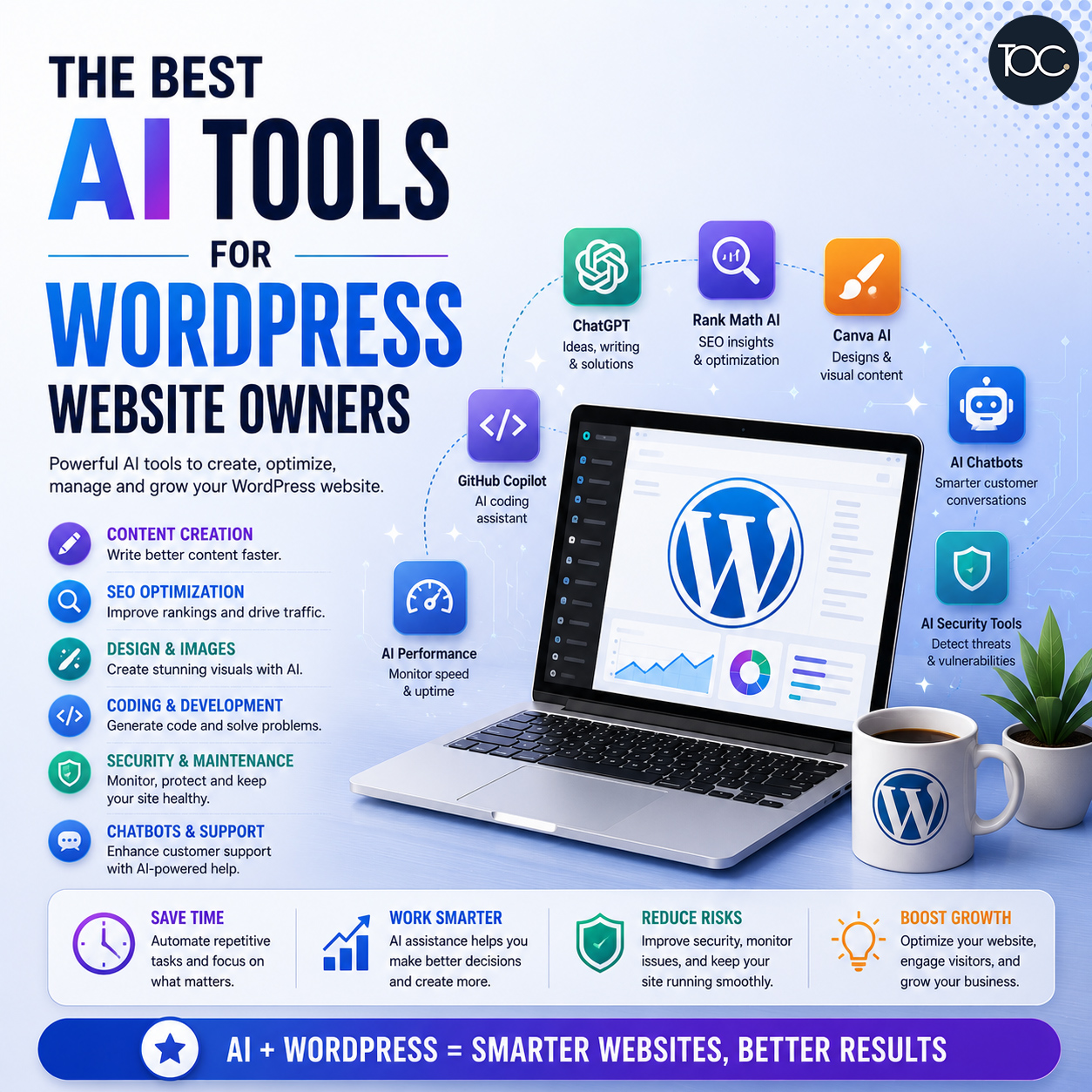
11. Can AI Help Small Businesses Create SEO Content?
Yes.
AI can be extremely useful for content planning and production.
Businesses can use AI to help:
- Generate topic ideas
- Create outlines
- Brainstorm FAQs
- Improve grammar
- Structure articles
- Simplify technical explanations
- Research related questions
- Improve existing content
However, businesses shouldn’t simply generate large amounts of AI content and publish everything without reviewing it.
AI doesn’t automatically know:
- Your customers
- Your experience
- Your projects
- Your business processes
- Your opinions
- Your real-world observations
The strongest content usually combines AI efficiency with genuine human knowledge and experience.
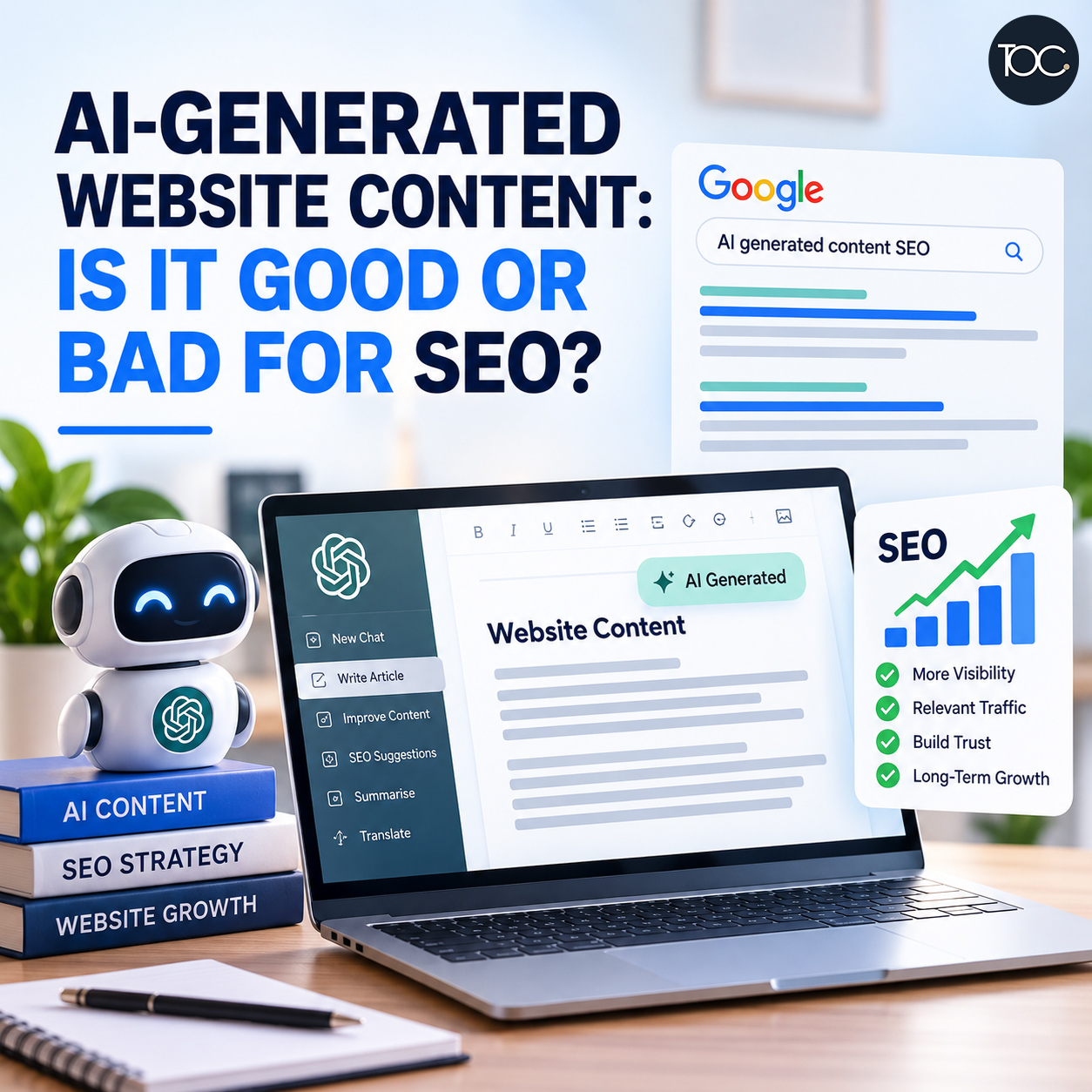
12. Is AI-Generated Content Bad for SEO?
Using AI doesn’t automatically make content bad for SEO.
What matters is the quality and purpose of the final content.
Before publishing AI-assisted content, ask:
- Is the information accurate?
- Is it useful?
- Does it answer the customer’s question?
- Have we added our own knowledge?
- Does it sound like our business?
- Is anything misleading?
- Does it provide something beyond generic information?
AI should help businesses create better content.
It shouldn’t become an excuse to flood a website with low-value articles.
13. What About ChatGPT and Other AI Assistants?
AI assistants create another way for people to discover information.
Someone may ask:
“What should I look for when choosing a WordPress developer in Singapore?”
or:
“Why does my business website need maintenance?”
Naturally, businesses want to know how they can appear in these answers.
There is no guaranteed technique that forces an AI assistant to recommend your company.
However, businesses can improve their overall online presence by:
- Maintaining a useful website
- Publishing accurate information
- Creating strong service pages
- Building topical expertise
- Earning legitimate backlinks
- Maintaining consistent business information
- Publishing original content
- Demonstrating genuine experience
These practices make sense whether customers discover you through Google, ChatGPT or another platform.
14. Technical SEO Still Matters
Good content alone isn’t enough if search engines have difficulty accessing your website.
Technical SEO therefore remains important.
Areas to consider include:
- Website crawlability
- Indexing settings
- XML sitemap
- HTTPS
- Mobile responsiveness
- Website speed
- Logical URL structure
- Internal links
- Page titles
- Headings
- Image optimisation
- Structured data where appropriate
Technical SEO creates the foundation that allows search engines to properly access and understand your website.
15. Website Speed and User Experience Still Matter
Getting someone to visit your website is only the first step.
Imagine your website appears prominently in search results, but when someone visits:
- It loads slowly.
- The text is difficult to read.
- The mobile layout is broken.
- Navigation is confusing.
- Buttons don’t work.
- The contact form fails.
Good SEO cannot compensate for a poor website experience forever.
Your SEO strategy should therefore work together with:
Web Design + User Experience + Website Speed + Conversion Optimisation
The objective isn’t simply to attract traffic.
The objective is to turn relevant visitors into potential customers.
16. Local SEO Still Matters for Singapore Businesses
For many Singapore small businesses, customers are local.
Search engines therefore need to understand:
- What your business provides
- Where you operate
- Whether your information is accurate
- Whether your business is relevant to the user’s search
Keep important business information accurate and consistent.
Depending on the type of business, this can include:
- Business name
- Website
- Contact information
- Address
- Operating hours
- Services
Businesses eligible for a Google Business Profile should also keep the profile accurate and updated.
17. Do Backlinks Still Matter?
Backlinks are links from other websites pointing to your website.
They can help search engines discover pages and understand relationships and authority across the web.
However, quality matters more than simply collecting large numbers of links.
Useful backlinks can come naturally from:
- Business partners
- Industry organisations
- Professional associations
- Suppliers
- Publications
- Media coverage
- Useful resources
- Project credits
Avoid focusing purely on obtaining hundreds of low-quality backlinks.
A smaller number of genuine, relevant links can be much more meaningful.
18. Internal Linking Is Also Important
Businesses often focus on backlinks but overlook links within their own website.
Internal links help connect related content.
For example:
SEO article → Web Design service page
WordPress maintenance article → Maintenance service page
eCommerce guide → eCommerce Development page
Internal links help visitors discover related information and help search engines understand how pages relate to one another.
As your website grows, internal linking becomes increasingly important.
19. What About Image and Visual Search?
Search isn’t limited to text anymore.
People can increasingly search using photographs and images.
Businesses should therefore pay attention to visual content.
Good practices include:
- Using relevant images
- Using descriptive filenames
- Adding appropriate alt text
- Optimising image sizes
- Using good-quality photography
- Creating useful graphics and diagrams
Visual search may be particularly relevant for businesses involving:
- Products
- Interior design
- Food
- Fashion
- Property
- Events
- Travel
- Creative services
Images shouldn’t be treated simply as decoration.
They are part of your website content.
20. Should Small Businesses Focus on SEO or AI Search?
Don’t think of the decision as:
SEO OR AI Search
A better approach is:
Build a website that both people and search systems can understand.
The fundamentals overlap significantly.
Focus on:
- A technically healthy website
- Clear service pages
- Useful content
- Strong internal linking
- Good user experience
- Relevant backlinks
- Accurate business information
- Genuine expertise
- Regular maintenance
- Helpful answers to customer questions
This creates a stronger foundation regardless of how search technology evolves.
21. Is SEO Still Worth It for Small Businesses?
SEO can be valuable when potential customers actively search online for the services or products your business provides.
One advantage of SEO is that useful pages can continue attracting visitors long after they are published.
However, SEO shouldn’t be treated as an overnight marketing strategy.
Results depend on many factors, including:
- Competition
- Website age
- Website authority
- Content quality
- Backlinks
- Technical SEO
- Search demand
- Keyword difficulty
Competitive keywords may take significant time and ongoing effort.
Small businesses should therefore treat SEO as a long-term investment in online visibility.
22. What Should Small Businesses Focus on in the Age of AI Search?
Instead of chasing every new AI or SEO trend, focus on strong fundamentals.
Build a Good Website
Your website should be secure, mobile-friendly, fast and easy to navigate.
Explain Your Services Clearly
Make it easy for both customers and search systems to understand what you provide.
Answer Real Questions
Use questions from customers as inspiration for useful content.
Demonstrate Your Experience
Share genuine insights and examples where appropriate.
Build Relevant Content
Create content around subjects closely related to your services.
Maintain Your Website
Keep your website technically healthy and information accurate.
Review Existing Content
Older articles can be updated and improved rather than constantly creating new pages.
Monitor SEO Performance
Use tools such as Google Search Console to understand which pages and search queries are generating visibility.
23. SEO Isn’t Disappearing—It’s Evolving
Search has changed many times before.
Mobile devices changed how people searched.
Voice assistants introduced conversational queries.
Social platforms created new discovery channels.
And now artificial intelligence is changing search again.
But businesses still need to make their information:
- Discoverable
- Understandable
- Useful
- Trustworthy
That is fundamentally what good SEO is about.
The format of search results may continue changing, but businesses still need to help potential customers find them online.
24. Final Thoughts
So, do small businesses still need SEO in the age of AI search?
Yes.
But SEO should no longer be viewed simply as:
Choose Keyword → Repeat Keyword → Rank on Google
A stronger approach is:
Understand Customers → Create Useful Content → Build a Strong Website → Demonstrate Experience → Improve Online Visibility
Traditional Google Search remains important, while AI-powered search is creating additional ways for people to discover information.
Small businesses don’t need to choose between SEO and AI search.
Instead, focus on building a strong online presence that can support both.
Your website should clearly explain what your business does, answer genuine customer questions and provide useful information based on real knowledge and experience.
Search technology will continue changing.
But useful, trustworthy information will continue to matter.
25. Frequently Asked Questions
25. Frequently Asked Questions
26. Need Help Improving Your Website’s SEO?
Having a website is only the first step. Your website also needs to be structured so that potential customers and search engines can understand what your business provides.
At THEOLDCOMPANY, we build WordPress websites for businesses in Singapore with SEO fundamentals in mind.
Our website services cover areas such as:
- WordPress web design and development
- SEO-friendly website structure
- Mobile responsive design
- Website performance optimisation
- Content organisation
- Internal linking
- WordPress maintenance
- Web hosting
As search continues to evolve with AI, the objective remains the same: make it easier for potential customers to discover, understand and trust your business online.
📩 Contact us today for a free, no-obligation consultation and discover how we can keep your website requirements.